
Health & Wellness
« Older Entries | Newer Entries »Get Up Offa That Thing With A Stand Up Desk
[ 1 Comment ]Posted on November 22, 2010 by admin in Health & Wellness
Monday, November 22nd, 2010What do James Brown, Leonardo Da Vinci, and Donald Rumsfeld have in common? They don’t believe in sitting down on the job
 James Brown actually seemed to prefer working above the desk. |
I consider myself something of an expert in workplace ergonomics. Years ago – before I personally spent much time at a computer – I remember chuckling at the sight of people who had plunked down a bunch of extra dough for those weird ergonomic computer chairs
You Look Hot With A Fag In Your Mouth
[ Comments Off ]Posted on November 10, 2010 by admin in Health & Wellness
Wednesday, November 10th, 2010Would making teens associate having a cigarette in their mouth with having a penis in their mouth be more effective than the new FDA anti-smoking campaign?
 We took a look recently at how the government gets it all wrong with anti-smoking campaigns by creating legislation that actually drives innovation in tobacco packaging. So I guess we shouldn’t be surprised – since our government is pretty much owned by all the industries that it’s supposed to regulate – that the FDA’s latest anti-smoking campaign looks like it was assembled by interns at RJ Reynolds’ ad agency. Although presumably inspired by the dramatic and offensive images used in the UK and Canada, the images in this campaign are almost kitschy, horribly retouched, and more likely to inspire Photoshop contests than deter smoking. As a smoker who occasionally ponders quitting, I can tell you with confidence that these images will have absolutely no impact on my cigarette consumption, nor any smokers I know. In fact, when other countries mandated that cigarette makers place these images on their packages, a friend of mine would ask friends traveling abroad to try to get him complete “sets” of all the disgusting images for his collection. Telling a smoker to quit smoking because it’s going to kill them is much like telling a skate punk to quit skateboarding because he’ll end up with broken bones poking out of his skin. The danger is part of the seductive nihilistic appeal. If the government really wanted adults to quit smoking, they’d issue free Chantix. It would probably be cheaper than all of these PR campaigns, and might actually help a few people quit. And when it comes to preventing youngsters from starting, I think The Onion was onto something with their It’s Gay To Smoke parody (video below). If you could actually get teens to associate sticking a cigarette in their mouth with sticking a penis in their mouth, peer pressure would take on a whole new dynamic, and maybe the youngsters that really do want a penis in their mouth could get down to business, and the rest could be “scared straight”, so to speak. But seriously, the fact is that a typical teen these days looks for images more graphic than these on purpose, so they’re certainly not going to be deterred from smoking by looking at them. I’d even argue that it’s sort of like the giggling, gross-out teen equivalent of the way Mad Men glamorizes smoking. So below are a few stabs at some alternatives. We challenge you to Photoshop and submit something better, which shouldn’t be hard; these took me about ten minutes. The FDA site has the images in a PDF file (13MB) or zipped JPEGs (6MB) if you’re interested. Read the rest of this entry »
Why Does The Government Keep Promoting Cigarette Smoking?
[ 3 Comments ]Posted on October 15, 2010 by admin in Health & Wellness
Friday, October 15th, 2010Thanks to the restrictions imposed by recent legislation, Pall Malls have never looked more appealing.
 How well do you think these would sell? |
I must confess to having what you may consider a filthy, disgusting habit. No, not that one. I smoke. I’m not especially proud of it, and I may actually quit some day, but with no thanks to the US Government. If you don’t smoke, you may not have even noticed the results of the legislation recently enacted that restricts cigarette makers’ labeling of their packaging. So what were the results? Mostly the packages are just lighter shades or more colorful and appealing. In essence, the regulations just drove the tobacco companies to spiff up and contemporize their brands, while giving them incomprehensible amounts of free press. Aside from the fact that it has been recognized for some time that smokers engage in a high degree of cognitive dissonance it is now often argued that warnings can actually encourage people to keep smoking by stimulating their coping skills for dealing with the negative messaging. And it has also been suggested by marketers like Martin Lindstrom (in his book Buyology: Truth and Lies About Why We Buy
Breast Cancer Awareness Month: I Pink Therefore I Scam?
[ Comments Off ]Posted on October 3, 2010 by admin in Health & Wellness
Sunday, October 3rd, 2010Is it time to rethink the pink ribbon and early detection approach and focus on direct funding and a CURE for breast cancer?
 The “think pink” theme definitely moves a lot of product. In fact, I’ll gladly sell you this forklift for $100,000 and donate 50% of my profit to charity. |
I’m always happy to support Breast Cancer Awareness Month, partly because, well… as a man I like breasts. But more importantly because of the fact that most of my closest friends are women, and as someone who does work with fashion and beauty (I do work with Dior), I’m acutely aware of how breast cancer is likely to cause a woman much more personal anguish and worry than other serious illnesses, simply because of how our culture places so much emphasis on a woman’s physical appearance, especially her breasts. Which is why I sometimes also ponder whether it’s time we rethink the pink approach. The “awareness month” campaign was founded in 1985 by AstraZeneca, which manufactures breast cancer drugs Arimidex and Tamoxifen. It got some extra oomph in 1993 when Estée Lauder founded The Breast Cancer Research Foundation and established the Pink Ribbon as its symbol. So for over two decades, it has been a powerful tool for keeping breast cancer on the map as a health concern, but to what end? It has been pointed out that the campaign was originally “conceived and paid for by a British chemical company that both profits from this epidemic and may be contributing to its cause“. And if you do a little poking around, you’ll find a lot of articles like this LA Times piece that points out that in spite of all the PR, fundraising, and research, deaths from breast cancer have only declined by about 2% per year since 1990, and the emphasis remains on early detection, not a cure. The major campaigns are still backed by AstraZeneca, which clearly profits much more from this strategy than finding a cure. Draw your own conclusion. Another obvious backfire effect is the fact that so many companies jump on the bandwagon more as a marketing strategy than as genuine fund-raising, siphoning dollars into potentially ineffectual channels. This Daily Finance article gets specific, but you only have to do a quick web search to find all sorts of opportunistic campaigns like the Minneapolis bar Bootleggers’ Twin Titties Series, or the Save The Tatas campaign that centers on products like “Boob Lube, The Original Breast Check Soap” and cheesy soft-porn-themed videos like this (also below) to promote them. And Estée Lauder is trying to “get social” this year with a campaign centered on bloggers posing for fashion photographer John Midgley. They have a Facebook page, but probably don’t realize that this idea has been around with a more user-centric approach for almost ten years with sites like the annual Blogger BoobieThon. So, there are plenty of ways to keep abreast of things, like wearing your I Love Boobies Bracelets 
Some People Will Do Anything To Get High
[ Comments Off ]Posted on September 16, 2010 by admin in Health & Wellness
Thursday, September 16th, 2010You never really notice how many people around you are getting high until YOU’RE NOT. And I bet you didn’t know that there’s research that shows that the color of the paint you huff affects the high.
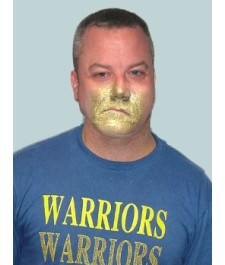 These days I get most of my kicks from photoshopping my friends’ faces into paint huffer mug shots. Hi Eric! |
What’s so bad about reality? I mean, do you find it somehow telling that more than 60% of Americans drink, but only 29% have college degrees? Don’t get me wrong, I started my personal war on drugs (they eventually won) at the age of eleven, with an accidental acid trip, and managed to try just about every drug available in the Western hemisphere over the next few decades. So oddly, the longest stretch of sobriety I can claim myself is just over ten years. I started thinking about how many people are getting high the other day when I was buying a chocolate bar at a local liquor store, and the kid in front of me paid over 50 bucks for 3 grams of something called “Dragon Spice” that looked like Marijuana. He should’ve tried Amazon, they have it for $39.99
