« The Glass Just Might Be Greener On The Other Side | Home | Oh. THAT’S What You Mean By “Political Convictions” »
Science Friction: Why Doesn’t Sci-Fi Find A Larger Market?
Topics: Popular Media | Add A CommentBy admin | November 14, 2010
Part one of our look at why sci-fi gets such a bad rap, with a look at four worthwhile science fiction films from the last few years that you may have passed over or not even heard of.
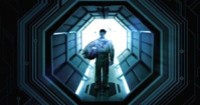
 Sunshine is just one of many great sci-fi films that get overlooked because of marketing. |
I’ve always been a little befuddled by the average person’s resistance to science fiction as a genre. I can understand why a person would be put off by the schlockier segment of this market, but every genre of fiction has a large quantity of commercial tripe from which you have to pick the better material. I would argue in fact that some of the greatest fiction of the twentieth century would typically be categorized as sci-fi: Arthur C Clarke


Moon
|
Sam Rockwell turns in a brilliant performance as Sam Bell, an employee of the energy company Lunar Industries, who gets to know himself in a surprising way as he wraps up a three-year solitary stint mining helium-3 on the far side of the moon. Kevin Spacey provides the perfect voice for his robot companion, GERTY. Directed by David Bowie’s son Duncan Jones with a budget of $5 million dollars |
Cargo
|
Anna-Katharina Schwabroh plays Laura Portmann, a doctor who has signed an 8 year contract with a cargo ship to get away from a dying Earth and its overcrowded space stations. Although it gets panned by some critics for its flat characters, I think that’s part of what makes Cargo work. This is a slow-paced, stylish suspense film as much as a sci-fi film, and is worthy of note if only because it’s a Swiss sci-fi film, shot on a $2 million budget over eight years. |
Sunshine
|
Although Sunshine is a stylish and well-acted sci-fi film, it’s also an interesting psychological drama, exploring another kind of power the sun seems to possess to us as humans. This film was massively undermarketed, and probably suffered from the deluge of films of the last few years with the word “sunshine” in the title. Great soundtrack too, by the way. |
Primer
|
Primer is probably one of the best explorations of time-travel paradoxes you’ll ever see. Sort of like a non-violent “Reservoir Dogs meets Memento”, it’s tightly scripted, solidly acted, and a remarkably solid production all around, especially in light of the fact that it only cost SEVEN THOUSAND DOLLARS. |