[ 1 Comment ]Posted on February 4, 2011 by admin in Technology
The iPhone finally comes to Verizon, but will it sound better? Time will tell, but have you ever wondered WHY the audio quality of cell phones is worse today than landlines were thirty years ago?
 
The only app I want on an iPhone is
the one that makes it actually
function for voice communication |
A friend asked me today if – since I’m a Verizon customer – I was FINALLY going to get an iPhone. Referencing “Convoy”, the 70′s novelty radio hit and movie
 about truck driver CB radio culture (here’s the trailer), I replied “that’s a big fat negatori, Rubber Ducky“. Yes, I’ve said it before. When it comes to technology, I’m a big whiny baby. Just see my Disappointing Technologies Part I and Part II. Or my explanations of why your mp3′s or your robots suck. But one thing I probably have found more annoying than anything – whether technology related or not – is the infernally faulty and obscenely expensive set of devices and services that we end up calling a “mobile phone”. Aside from the absurd prevalence of dropped calls (a friend of mine has a four square foot area in his Chicago apartment where his AT&T iPhone works that we call his “iZone”) I’ve always been astounded that in the 21st century, a device that is specifically designed to transmit your voice to another person’s ear does it less effectively than the walkie-talkies I played with as a kid. And this horrible sound quality is nowhere more obvious, in my opinion, than with an iPhone. This Wired piece explains that part of this problem will go away with an iPhone on Verizon’s networks, but I predict that the fundamental audio quality of cell phones – which is arguably a joke compared to landlines of even thirty years ago – will not get any better soon. Why? The first reason is that – as most of us would agree these days – a cell phone isn’t for talking, it’s for texting, web browsing, and apps. Verizon is well aware of this, and started revising all their data plans in preparation for the launch of the Verizon-compatible iPhone, which will add a new kind of load to their networks. And the second reason? It’s the fact that no-one seems to care about the atrocious audio quality of modern cellular/wireless networks. If it ain’t broke, why would they fix it? If you don’t know what I mean, you’re either a digital native who wouldn’t understand the old pin drop commercial of a couple decades ago, a very tolerant person, or perhaps just plain deaf. Remember when you were a teen, and in naively romantic moments in the wee hours on the phone, you’d play your boyfriend or girlfriend some cheesy song that expressed your complex teen feelings in a way that words never could? Well, forget it pal. If you have typical cell service in America and have ever tried to achieve anything beyond the garbled, delay-ridden talking that we’re used to, you know what I mean. But have you ever wondered why? You’d think it’s because the signal is being bounced through the atmosphere to a bunch of towers, maybe a satellite, and then a few more towers, right? Well, that is in fact part of the problem. But the real problem has two more elements. One of them is profit. Rather than investing in and building out high-quality capacity and then charging you for it, providers will continue to offer you the lowest acceptable quality to eek the most out of existing networks. And if customers don’t seem to care about the audio, they’ll continue to focus on non-voice data transfer. The other part of the problem is the audio compression codecs providers use to squish decipherable voice information into the smallest possible amount of data. Somehow, the rather shoddy codecs used for the 128kbps mp3′s you buy on iTunes became accepted as the industry standard for quality audio. That’s probably okay ultimately; studies show that the majority of people actually can’t distinguish that bitrate from higher quality sound sources. So fine. Let’s just say that’s acceptable audio. But if you’ve ever heard a song in say, a 64 or 32kbps bitrate, you know how bad things start sounding pretty quickly. And although simple voice data may even sound clearer around 32kbps (because a lot of people’s weird breath and mouth noises get compressed out) you may be surprised to know the actual compression and frequency response numbers for standard cell phone service. The bitrate is often 8kbps, and the frequency range being used is typically 400 Hz to 3500 Hz. For comparison, a decent stereo system has perhaps 60 Hz – 18,000 Hz capability. The 400 Hz – 3500 Hz part wouldn’t be so bad by itself, because aside from harmonics that affect the timbre and the sibilant sounds we make, the majority of vocal sounds are in that frequency range. The real problem is in all the other things the audio codecs do to compress the voice data. While it is in fact INCREDIBLE what audio engineers and programmers have developed over the years to facilitate various kinds of voice audio compression, the choice to continue applying the most “aggressive” of these algorithms and codecs is what makes your cell call sound like crap. Aside from the low bitrate and limited frequency response, the voice signal is further analyzed and hacked up with things like voice activity detection and linear predictive coding, which decide whether something is a voice, background noise, or silence. The codec then discards whatever it thinks is not useful voice information, further compresses the data, transmits it, and reverses the process on the other end. Thus the word “codec”, which is a portmanteau of “compressor-decompressor”. The result of all this secret-decoder-ring monkeying around? Well, when you combine it with the bizarrely un-ergonomic deck-of-cards-like shape of an iPhone and the tiny mic and specialized audio processing designed to compensate for it, the result is that horrifying shriek that interrupts your friend’s garbled voice when their child says something at a normal volume in the background. So no, I won’t be rushing to the Verizon store to pick up an iPhone. In fact, I’m thinking of switching to one of these little handheld CB jobbies
 . It says the range is only four miles, but that’s without shootin’ skip.
Read the rest of this entry »
[ 1 Comment ]Posted on February 3, 2011 by admin in Lifestyle & Culture
The easiest way to dismiss Astrology as a useful area of study is to not study it at all. Part I (the most boring installment) of my Astrology 101 course.
 
Cosmos and Psyche is a weighty read, but
offers a lot of insight into modern astrology. |
You probably are familiar with the minor hubbub a few weeks ago about how your astrological sign had suddenly changed, proving that astrology was a sham, because astrologers were such ignorant twits that they didn’t know anything about actual constellations and how their relative position shifts over time due the tilt of the Earth or the moon’s gravity or whatever. While the “news” (even the poor guy who accidentally started the whole thing later pointed out it was nothing new) made for some amusing small talk, I kept my mouth shut through most of it all. Why? Because – brace yourself – I’m an astrologer. Or more accurately, I’ve studied astrology quite a bit. And over time, I’ve noticed two things that are almost always present when people are dismissing astrology as a frivolous and unscientific pursuit. The first is a nearly absolute and willful ignorance. And the second? A more passive kind of ignorance. The first kind of ignorance is the kind I want to address, because the people who seem to have the loudest voices and the most confidence in their wholesale rejection of astrology are often the most utterly ignorant of its methods, and aggravate their ignorance by trying to treat the field as a conventional science. The first and most basic part of their problem is that they assume that the “sun sign” astrology that is presented in tabloids has anything to do with what contemporary astrologers do. The second part of their problem is that they take this assumption that astrologers frame all their work around where the sun appears to be when a person is born, and add another assumption, which is that astrologers think that astrology is a hard science. They then proceed – in total ignorance based on their own failure to examine the topic – to try to dismantle it for being unscientific. So here I am, to try to bring a little light to the topic, so that if and when you still want to dismiss the whole study as frivolous, you’ll at least be doing it from a more informed point of view. One of the first problems we should get out of the way is the fundamental “purpose” of astrology. Although the inclination is to think of it as “fortune telling”, and although you can find plenty of people who claim it is a predictive tool, these folks are easily hung out to dry in the same way as any charlatan, whether you’re talking about economists, psychics, or mortgage consultants in 2007. Time will prove the fallacy of their claims. But the most useful implementation of astrology – and the implementation I think most well-studied astrologers will agree upon – is in fact as a tool of reflection, and a way to explore human behavior. And the study is rich with the necessary imagery and symbology to do just that. The assumption that astrology lays claims to defining direct causal connections between planetary events and mundane events is mostly imposed by people who haven’t studied it, not the people that do. In fact, I’d additionally assert that modern astrology is an excellent tool for exploring phenomena that are described as synchronistic events, as well as for pondering the kinds of perplexing acausal events that are an intrinsic element of certain phenomena in physics. And regarding the methodology and theoretical foundations? This is where it gets interesting if you actually dig deeper. Many contemporary astrologers eschew much of “classical” astrology altogether. Classical astrology was based on some basic apparent positions of objects in the cosmos, and the motion of these objects in relationship to each other over time. It also included a lot of arbitrary divisions of the visual cosmos with simple geometry. This is what you’re hearing about when someone refers to houses (which are 100% arbitrary, leading to a lot of debate if one takes them seriously) and zodiac signs. Even centuries ago, a competent astrologer was well aware that the groups of stars that roughly line up with the plane of the solar system’s orbits were arbitrarily imposed, and that the 12 accepted constellations weren’t all literally 30 degrees wide, conveniently fitting a circle. In any case, in spite of the fact that these concepts still influence the interpretation of the symbols of astrology, they’re almost entirely abandoned by many, via the contemporary study of harmonic astrology, which is in fact based on massive statistical correlations of biographical and historic texts with the angular relationships between planets at given points. The volume of material statistically compiled this way probably rivals the statistical modeling of modern psychology. Which is a science (along with sociology) that is probably a better analogy for what astrology studies than astronomy is. I’m going to be doing a few followups on this topic, in the form of what I hope is a more entertaining “Astrology 101″, but if you want better insight into the rather compelling body of knowlege connected with the study of astrology, I highly recommend Cosmos and Psyche by Richard Tarnas. Although referred to as unadulterated crack-pottery by Thomas Meaney of the WSJ, it’s worth noting that Tarnas was also the author of The Passion of the Western Mind , which is a staple text in many college courses in philosophy and religious studies, and about which Joseph Campbell said, “This is the most lucid and concise presentation I have read of the grand lines of everything a student should know about the history of Western thought. The writing is elegant and carries the reader with the momentum of a novel“. Cosmos & Psyche is a dense, lengthy read, but the richness of Tarnas’ knowledge of history alone makes it an interesting read, even if you don’t accept the connections he outlines between historic and cosmic events.
[ Comments Off ]Posted on February 2, 2011 by admin in Holidays
It’s interesting that in our anglocentrism we call the first day of the Chinese year 4078 “Chinese New Year 2011″. So what does the Chinese Year of the Metal Rabbit have in store for us? Ask your Feng Shui stockbroker.
If – like many Americans – you’re ignorant of even the most basic aspects of other cultures, what better time to learn something about them than Chinese New Year? Especially since if things keep going the way they have been, there’s a good chance that you’ll be providing the cheap labor for their foreign manufacturing instead of the other way around, as you’re accustomed. To paraphrase Yakov Schmirnoff: “In capitalist China, cheap labor utilizes YOU“. So why not prepare to impress your future employer now? My first experience with Chinese New Year was kind of interesting; I once managed a Chinese restaurant for several years. Each year, about a month after the western new year, I created my own tradition by granting myself a kind of amnesty for my failed new year’s resolutions. This seemed totally acceptable at the time; as far as I could ascertain, even after working side by side with Chinese people every day for three years, all Chinese New Year meant was a nice bonus from the boss, eating a huge dinner, playing a lot more Mah Jong than usual, and maybe receiving a brightly-colored tin of Moon Cakes (not to be confused with Moon Pies , of course). Whenever I asked about the traditions of Chinese New Year and the whole “Year of the [Insert Animal]” thing, I got the same kind of answer you’d get from an American when you ask them about their holidays. A sort of muttering “well, I think maybe it’s because, um….” followed by a round of speculative discussion amongst a bunch of people who had no idea what they were talking about, with a stealthy transition back to the partying at hand. For some reason though, this year I couldn’t tolerate my own ignorance any more, and decided to do some research. You should pay attention here too. It’s always good to learn about other cultures, right? Even if it doesn’t promote global harmony and understanding, at least you end up knowing exactly why you fear or hate an entire race of people you’ve never met face to face. So first of all, you need to understand that the reason the date of Chinese New Year is never the same on the western calendar is that the Chinese calendar is Lunisolar, rather than Solar, like the western calendar. Which sounds technical, but it’s actually quite simple. The Chinese calendar has twelve months, just like ours, and every second or third year it has an intercalary month to make things work out. Wikipedia breaks it down for us: “The sun always passes the winter solstice during month 11. If there are 12 months between two successive occurrences of month 11, not counting either month 11, at least one of these 12 months must be a month during which the sun remains within the same zodiac sign throughout (no principal term or cusp occurs within it). If only one such month occurs, it is designated intercalary, but if two such months occur…..” OKAY, OKAY! Never mind that. All you need to do to know what Chinese year it is and when to celebrate the new year is look it up on the internets! For a little background though, you might find it interesting to read a little about the Chinese Zodiac, which explains why the year 4078 (2011 in the west) is the Year of the Rabbit, and what that really means. And if you really want to chase this down the rabbit hole, it happens to be the year of the Metal Rabbit, which according to Feng Shui investment experts is going to be volatile.
[ Comments Off ]Posted on February 1, 2011 by admin in Popular Media
If you love seeing films at the theater, you better hurry. Within a couple years what you’re watching will almost certainly be coming from a hard drive.
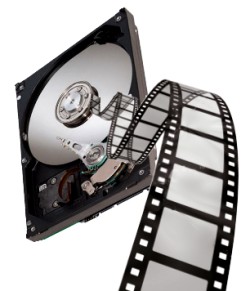 When was the last time you went to a theater and saw a film? I guess that depends on what you call a “film”, because there’s a reasonably good chance that what you saw was data stored on a hard drive on a media server and projected with a digital projector. The other day I ran across this rather charming clip (also below) that features a film projectionist talking about his job, and how that job is slowly becoming a relic. If you really love film, you may have the same fondness that I do for classic full-size theaters, and have a certain irrational attachment to all the things that go with them, including the distant clacking sound of an actual film projector. As much as I generally prefer this archaic process to work, one of my favorite theater experiences ever was when – in the middle of Hitchcock’s Dial M for Murder
 – the projector jammed and I watched the frame melt on the massive screen at the Michigan Theater in Ann Arbor, MI. These days, this would just be an annoying interruption of the high-priced experience you pay for at the multiplex, but at the time – surrounded by cinema addicts – it was a chance to talk about film while the projectionist scrambled to get the film rolling again. So this reminiscing got me curious. They’ve been talking about digitizing theaters for quite a while now, but how many theaters are actually digital? This turned out to be some tough information to track down; the industry is changing so rapidly that even the venerable HowStuffWorks.com isn’t up to speed. Although their features on film projection and screens are pretty interesting, they’re woefully out of date, as is their feature on digital projection. The US film and theater industries in general have been struggling for some time to decide who was going to foot the bill for the switch to digital, and which technology was going to be the standard, a struggle that’s not so surprising if you look at this lengthy list of theater chains. In any case, this has all been changing rather rapidly, probably due in part to how unprepared theater chains were for the onslaught of 3D, which requires digital projectors. Last year three major players – AMC Entertainment, Cinemark Holdings and Regal Entertainment Group struck a deal to convert about 14,000 screens, and smaller chains like Showcase got on board more recently. In broad strokes, the deals mean that almost all US theaters should have digital by the end of 2012. We’ll be doing a followup piece; the mysteries of the projection booth are fascinating, and there’s remarkably little up-to-date information about the broader impact of the suddenly-rapid switch to digital. Read the rest of this entry »
[ Comments Off ]Posted on January 31, 2011 by admin in Music
And the flower and the tree. And the Hall. And the Oates. LA pop duo The Bird And The Bee cleverly make you think they’re just hipsters when in fact they are totally awesome pop geniuses.

 One of the drawbacks of being an aging punk is that a lot of the cool stuff that aging hipsters are listening to manages to pass you by. I say “aging” hipsters, because I’d have a hard time believing actual hipster hipsters would fully grasp the inter-generational pop culture genius of LA songwriting duo The Bird and the Bee
 . I actually heard one of their Hall & Oates covers a while back, and gave it a resounding “meh”, because there have already been so many bands like Pizzicato Five or Nouvelle Vague that did the “listen to the funny naive way we play this song from two decades ago” thing so well. But now I know that the fact that I initially blew them off was simply that I wasn’t exposed to their Hall & Oates cover in the context of their greater oeuvre. Today a friend sent me a link to the video for their tune Polite Dance Song (also below). Not only did I kind of like the pondering Scandinavian Europopiness of the tune, the dancers in the video are AWESOME. The only thing I had any complaint about was the affected hipster indifference of singer/bassist Inara George and keyboardist Greg Kurstin. But I thought to myself “no band can do a video this awesome and not actually BE pretty awesome”, so I Iistened to more, and within in hour had succumbed and picked up their 2007 debut album The Bird & The Bee
 , 2009′s Ray Guns Are Not Just The Future
 , and last year’s Interpreting the Masters, Vol. 1: A Tribute to Daryl Hall & John Oates. Although you may want to write them off as hipsters themselves, you simply can’t. They’re far too talented, and Inara George’s voice has the same kind of charm that Astrud Gilberto’s did; even when auto-tuned, it has a fragile confidence that suits the melodic wit of their songwriting perfectly. You also can’t really call someone a hipster if they really are hip, and I think The Bird and the Bee have proven they are. Partly with their own solid songwriting and performance skills, and partly with their brilliant joke that isn’t really a joke. Because in spite of Daryl Hall and John Oates’ respective “eternal mullet” and “porn-star mustache & perm” images, Hall & Oates WERE masters, and DO deserve a tribute. They’re probably amongst the most talented and definitely amongst the most overlooked songwriters of the last couple of decades. And The Bird and the Bee’s “Interpreting the Masters” mostly does them some justice, with the exception of a karaoke-like moment or two. And I think this article about John Oates’ guest appearance at one of their shows makes it clear that they have an appropriate level of respect for the hallowed pop ground they were exploring with their tribute. I look forward to seeing where they go with future releases; it would be nice to hear them stretch their wings a bit with something more “genuine”. Given the love for jazz standards that all their press material suggests brought them together in the first place, I’m sure they’ve been holding back on something in the interest of pop accessibility. In the meantime I’ll be enjoying their last few releases’ hooky, well-crafted, metahipster pop. Read the rest of this entry »


