
Music
« Older Entries | Newer Entries »Live Indignation & Ticketmaster Slavery
[ Comments Off ]Posted on June 9, 2010 by admin in Music
Wednesday, June 9th, 2010It would be nice if the cost of live music were to enjoy the same market adjustment that recorded music has over the last decade, but things will probably get worse before they get better with the merger of Ticketmaster and Live Nation.
 Few things have made me more ecstatic than the explosion of indy music over the past decade. But I still have one complaint. Ticket prices. While the average pop song has settled nicely at a price of about a dollar, and the artist generally takes a bigger slice of that dollar in spite of the lower unit price, concert tickets rose in price by over 80% between 1996 and 2003, and have continued to rise consistently since then. What’s behind this insane inflation of concert prices? Well, everyone’s pointing fingers, but most agree that it began over a decade ago with the aggressive and monopolistic practices of Clear Channel, who devoted most of their energy to decimating the diverse network of venues and promoters that used to exist. But as easy as it is to place ALL the blame on them, the fact is that “premium artists”, i.e.: dinosaur rock baby boomer idols like the Rolling Stones and the Eagles – are just as much to blame in many ways, by charging upwards of 300 bucks for shows, in order to offset their lousy album sales and still be able to stay in $2,000 a night hotels while on tour. Even a next generation act like Green Day can be accused of this greed, if you believe the numbers in this infographic; Green Day’s 65% cut makes the promoters and venues look like they’re being reasonable. It’s rough enough out there that even a well-established artist like Imogen Heap had to throw in the towel recently. And it’s probably going to get worse before it gets better, in light of the DOJ’s recent approval of the monster merger of Live Nation and Ticketmaster. I think it’s time we started to practice some asymmetrical warfare techniques against the concert ticketing industry. It would be amazing if a network of non-ticketmaster promoters and venues could pull it together. I personally would be out every night of the week if I could catch a decent band for ten or fifteen bucks on a regular basis. We’ve done it with record labels, lets change the game with radio and live music too.
Entertainment For The Braindead
[ Comments Off ]Posted on June 3, 2010 by admin in Music
Thursday, June 3rd, 2010No, it’s not a roundup of this summer’s blockbusters, it’s a charming lo-fi electrofolk music act from Cologne Germany.
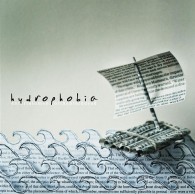 The sixteen year old me is really mad at Julia Kotowski, the twenty-something from Cologne, Germany that is the voice and talent behind Entertainment For The Braindead. You see, when I was first mumbling my moody songs into a microphone in my bedroom as a teenager, if I wanted to layer my simplistic guitar picking, I had to take my open-reel Revox tape machine and put scotch tape over the erase head to create multiple tracks with a method we called sound on sound. There was no way I could perform the stuff live in a cafe, staring at my feet moodily mumbling to charm the audience with my shy genius after setting up a groove on my digital looper. Plus I probably had to walk barefoot uphill both ways in a foot of snow to get to the gig, just like my grandad who worked in the coal mine did. Okay. I’m not mad anymore. See how temporal teen angst can be? It’s hard to stay mad at someone like Kotowski if you just toss on some of her music; the stuff was literally recorded in her bedroom, and although this kind of post-emo lo-fi electrofolk can be really annoying, there’s a delicate genuineness here that works. And the price is right; the two releases I’ve listened to – Hydrophobia and Hypersomnia are available as free downloads. Entertainment For The Braindead also seems to receive some kind of distribution support from “netlabels” aaahh-records.net and Aerotone.be, which as of this writing both seem to be restructuring their sites. ETFB’s site also has an amusing note on the “shop” page about how they received more than 75 orders and couldn’t keep up with the demand. Time to come out of the bedroom guys. Read the rest of this entry »
The Future Of Musical Instruments?
[ 2 Comments ]Posted on May 28, 2010 by admin in Music
Friday, May 28th, 2010The Eigenharp and the Misa Digital Guitar are amazing devices. Are instrument designers finally making devices that aren’t just silly keyboard/guitar mashups?
 I’ve always been intrigued by new ways to make musical sounds. In fact, the very first post here on Dissociated Press was about the Moog Guitar. Although I call myself a guitarist on occasion, my main “axe” for a long time was a Rickenbacker 481* with custom pickups, usually run through odd combinations of a Big Muff
Bell Gardens – Hangups Need Company
[ 1 Comment ]Posted on May 22, 2010 by admin in Music
Saturday, May 22nd, 2010Members of the groups Stars Of The Lid and Furry Things get together to form the immaculately anachronistic pop group Bell Gardens.
 If you enjoy perusing the meandering sub-genres of current indy pop, you might be intrigued by Bell Gardens’ new EP “Hangups Need Company” (available on vinyl


He Blinded Me With Silence
[ 2 Comments ]Posted on May 15, 2010 by admin in Music
Saturday, May 15th, 2010Thomas Dolby had a tremendous impact on pop music for a few years, and then it seemed he lived up to his last name, suppressing any noise. He’s back though, with a new album called “A Map Of The Floating City”, due for release later this year.
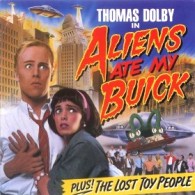  This is probably one of my favorite pop albums of all time. |
If you know your pop music history, you know that Thomas Dolby was – in spite of a rather short life on the mainstream charts – one of the most influential acts of the 1980′s. If you don’t know your pop music history, you’d at least know his songs She Blinded Me With Science


