
« If Necessity Is The Mother Of Invention I’d Like To Meet The Father | Home | No Egg-Nauguration For Obama »
Trying To Eat An Organic Diet? Read Behind The Labels
Topics: Health & Wellness | Add A CommentBy admin | January 2, 2009
Remember: If It’s 95% Organic, It Can Still Be 5% Crap
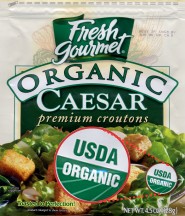 When people start talking about diet and how it affects your health, I’m reminded that I’ve been very lucky. I grew up in a town that has a lot of fresh produce markets and decent restaurants, so my earliest experiences with food were that fresh was good, and cooking from scratch was fun. As a result I eat very little processed food, without really even thinking about it. It doesn’t seem like rocket science, and I’m convinced that eating this way has kept me much healthier than a lot of people my age who habitually plugged into the habit of using “productized” meats and vegetables and prepared commercial sauces. If you’re interested in pursuing a less-manufactured diet, it’s not so hard. Instead of looking for labels that say “Organic” or “All Natural”, look for a LACK of labels. I was reminded of this recently when I bought a bag of commercial Caesar salad croutons (Fresh Gourmet Organic Caesar Premium Croutons, to be specific). I really wasn’t paying much attention when I selected them. Out of the 20+ choices in my face at the local supermarket, I simply chose the one that looked the least “flavored”. I still didn’t look at the package until after I put them in a salad and nearly gagged on the chemical taste of the first crunch. Upon looking at the package, I was startled by the emphasis on “Organic”, including the “USDA Organic” stamp (see photo). Every ingredient in the “Ingredients” list had the adjective “organic” in front of it, yet this stuff tasted like a salt-soaked chemical bomb. What was up? Well it turns out “USDA Organic” means that 95% of the ingredients are organically produced. You don’t have to be a chef or a scientist to understand that if something is 5% crap, there’s a pretty good chance it’ll be crappy. If you’re going to rely on labels, this quick Consumer Reports summary might help you make some better decisions.