« Older Entries |
Newer Entries »
[ Comments Off ]Posted on July 10, 2010 by admin in Lifestyle & Culture
Saturday, July 10th, 2010
Sometimes self knowledge is the greatest obstacle to self knowledge.

My brain is actually pretty
easy to map lately |
Many would agree that the first step in knowing anything about life is to know oneself, so it’s interesting that we don’t know who originally said “Know Thyself”. Many of us actually go through life with little self examination – some with great results, some not. Obviously if you’re “doing it right”, thinking too much can actually lead to bad choices. But probably more often, we avoid self examination because it’s simply too uncomfortable. The fact that many people seem to operate on a rather unconscious level is why one of my favorite lines from a movie is in Blade Runner  when Harrison Ford says – referring to the the artificial human that thinks it’s a real human – “How can it not know what it IS?” I personally got an interesting and rather simple lesson in self-knowledge recently while talking to a life coach, which was: One of the greatest obstacles to self-knowledge is assumed self-knowledge. I’ve always been rather self-examining; perhaps to a fault. As a result, over the years I had built up a sort of “story of myself” that was based upon things that I had learned through self-exploration over the years. The problem? I had CHANGED in many ways through those years, but since I “had my story down”, I really didn’t know myself at all. And once I started digging in, I was a little surprised. My assumption that I was oganized and focused had allowed me to become disorganized and unfocused, as I started burning out on my work in web development, my “knowledge” that I was good at fresh starts helped me procrastinate on a fresh start, and my knowledge that I had a high tolerance for stress helped me let my life become an untenable mess of ungratifying work, financial struggles, and never-ending anxiety. So how did I fix things? Well, I haven’t finished yet, which is why I thought this might be a good time to share some things I’ve learned . I’ve touched on this more humorously before, asking If You’re So Rich, Why Aren’t You Smart? and Just Who The Heck Do You Think You Are? Both of those pieces have a lot of links to online tests for things like Howard Gardner’s concept of Multiple Intelligences
 and Myers-Briggs based quizzes. Just Google Myers-Briggs and you’ll find hundreds more of those. They’re not a bad start. But what I found was that in spite of apparently being an ENFJ (like Oprah, Reagan, Obama, and Abraham Maslow) I was paralyzed by indecision, anxiety, and a sense of futility. Which is how I found out what was really missing for me, which was a more spiritual approach. As a result, I find myself digesting what many would consider a bizarre library of books that range from the spiritual to the disturbingly “self helpy” to the “I wanna be a millionaire” genre. I’ve listed a few below. The funny thing was that it was a couple of the sources I’d least expect that opened my eyes the most – something highlighted in this PositivityBlog piece, which makes three simple suggestions, one of which is “do the unusual thing”. Often doing the thing that is what you least want to do is what you need to do most. Read the rest of this entry »
[ Comments Off ]Posted on July 3, 2010 by admin in Lifestyle & Culture
Saturday, July 3rd, 2010
Yeah, yeah. Things fall apart; the center cannot hold, yadda yadda. Maybe all this recent eschatology is actually just taurine scatology.
Is the end of the world near?
Probably not, but talking about it
sure sells a lot of books and DVD’s |
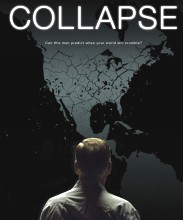
Okay, western civilization. You had your shot, and the best you could muster was Lady Gaga, Glenn Beck, mortgage derivatives, and American Idol. So when the hell are you going to end like any other self-respecting civilization? Well, pretty soon, according to the seemingly intelligent people who’ve posted 18 pages of immensely detailed commentary on sites like this. And also according to seemingly intelligent people like Michael Ruppert, former LAPD officer, writer, and founder/editor of From The Wilderness , the popular newsletter and website devoted to investigating political cover-ups and peak oil issues. I recently watched the film Collapse, which is essentially an 80-minute monologue delivered by Ruppert in an Errol Morris-like documentary style. Ruppert is an intelligent and articulate guy, and has clearly done his research. And he’s convinced the end is near. I can actually recommend the film; it’s definitely thought-provoking. But as I watched it, a line of thought kept occurring to me. People like Ruppert present a pretty good case for our impending demise, but why are they so fixated on this simplistic outcome? Why such apocalyptic alarmism? I personally don’t think we can use historic models to predict even our immediate future; this is an unparalleled period in human development simply because of population density, mobility, and rapid information exchange that just makes things less predictable across the board. So why do people ranging from a respected scientist like Frank Fenner, who says the human race will be extinct in 100 years to collapsitarians like Ruppert, to borderline nutjob survivalists like the American Preppers Network all think we’re doomed? If you don’t feel like taking the plunge, at least skim The Psychology of Apocalypticism, a lengthy exploration of the topic from a “psychohistoric” point of view. It mostly frames the topic in terms of how religion has shaped our culture, but doesn’t explore two psychological angles I think are pertinent when exploring the “psychology of the apocalypse”. One being the simple anxiety aroused by realizing we may have to change our way of life, and the other being an unconcious collective guilt for how good we’ve had it in the west while so many around the world suffer. And let’s not forget that according to Oxfam, natural disasters actually have increased six-fold since 1980. Oh crap. Maybe the end IS near. Read the rest of this entry »
[ 1 Comment ]Posted on June 27, 2010 by admin in Lifestyle & Culture
Sunday, June 27th, 2010
How to disarm your enemies by twisting the meaning of common psychological terms
  |
Have you ever sat wanting to strangle someone for using pseudo-psychological terms as they babble on forever about the people in their life, and when they were finally done, said something like “wow, that’s really insightful”? Sure you have. That’s because you’re so passive aggressive. It’s amazing that with all the therapy going on in America, people seem crazier than ever, and in spite of decades of research and billions of dollars spent, we still turn to Dr Phil, Dr Laura, and Oprah to deal with the problems in our lives. Perhaps one of the greatest benefits of all the psychological studies of the last century and the terminology needed to make them sound purposeful is just that – the terminology itself. We now have a plethora of terms to address the common problems that we’ll never actually fix, and using them protects one from scrutiny, because using them gives the impression that one is at least “self-examining” or “exploring their personal growth”. Below is a short list of common psychobabble terms, with examples of their most effective use. If you have one or two of your own, feel free to share. Maybe we’ll discover an unexpected s y n e r g y. Read the rest of this entry »
[ 2 Comments ]Posted on June 21, 2010 by admin in Lifestyle & Culture
Monday, June 21st, 2010
The fact that our civilization is doomed doesn’t make me a pessimist.

 On a day-to-day basis I’m probably one of the most upbeat people you’ll meet, but in the big picture, I’ve been waiting for the end of the world since the 1980′s, when it seemed pretty obvious – at least based on the fashion of the era – that it was just around the corner. In fact, back then it was quite fashionable to be awaiting the apocalypse. Many of the best dystopian films (Blade Runner, Brazil, Mad Max, etc.) were made in that decade, and Reagan ended the cold war by bumping things up a notch with the Star Wars Defense Initiative and flippant sound check jokes about outlawing Russia and bombing them. Which is why I’m so excited that apocalyptic thinking is back in style, and that people like me even have a catchy new name: Collapsitarians. I have to admit that ever since the financial catastrophes of late 2008, I feel a gleeful giddiness every time the global markets wobble, excitedly anticipating their total collapse and ensuing mass financial panic and social disorder. My enthusiasm for this sort of cataclysm isn’t the same as the crowd yelling at the person on the ledge to jump, nor does it stem from some Gloomy Gus attitude. No, I just have an intuitive understanding that the industrial age is toast, and as Einstein said: “the significant problems we face cannot be solved at the same level of thinking we were at when we created them“. I’m not hoping for “the end of the world” like some kind of Rapture hopeful, I only welcome the demise of our current way of life as a means to expedite a new and better way of life. If you have a hard time embracing this idea because of your consumer culture driven cognitive dissonance, I highly recommend John Michael Greer’s The Long Descent: A User’s Guide to the End of the Industrial Age, which explores our impending demise in a kinder, gentler fashion. In it he does a great job of explaining concepts like peak oil, but in a less alarmist manner, and with a broader cultural context than the intellectual NPR liberal that typically rants about topics like this. He also points out that we’re not likely to see some abrupt cataclysmic collapse, but rather a slow “slide down statistical curves that will ease modern industrial civilization into history’s dumpster”. For a quick insight into his line of thought without reading the book, check out On Catabolic Collapse, in which he outlines the simple ideas that 1.) Historically, most civilizations’ expansions have exceeded the availability of the resources they were built on, and 2.) There are outcomes that are more likely than the polarized extremes of eternal progress or total collapse. I for one would welcome a more difficult future if it meant we’d all be too busy simply surviving to argue ignorantly about politics or prattle on all day about who’s going to win on American Idol. Read the rest of this entry »
[ 1 Comment ]Posted on June 10, 2010 by admin in Lifestyle & Culture
Thursday, June 10th, 2010
Why live your own life when someone overseas can do it cheaper and better?

I have an evil plan to
outsource myself to myself. |
Recently I was working on a project that became stalled, largely because I did a poor job of assessing the scope of the project in the first place, which led to a serious case of scope creep. I was frustrated, the investor was frustrated, and things were going nowhere. The solution? Ironically, I outsourced myself out of income by agreeing that the best solution to keep the project in motion was to hire an overseas freelancer. This leads to a condition I’m not too fond of, something the self-employed sometimes refer to as being “independently broke”. I set my own hours, have immense creative freedom, and can work from home, among other things. The only drawback? I don’t get paid. This got me joking with a friend though, about how great it would be to outsource my whole life. What if someone could call Verizon and AT&T and resolve the seemingly endless billing problems I have with them, something I’m really good at but never have the time to do? Or what if someone could meet the perfect woman for me, so I could settle down and finally be forced to get a real job? Or maybe even write articles like this for me, so I have more time to market them? Well, I was only slightly surprised that someone had done this, and with hilarious results. Check out My Outsourced Life, by Esquire’s AJ Jacobs. In a nice twist, Tim Ferriss (author of The 4-Hour Workweek ) featured it on his blog, meaning he outsourced his work to an American who was outsourcing his work overseas (see the video below which explains how this trend will lead to one man in Afghanistan ending up doing 83% of the world’s work by 2025). And my little jest about outsourcing my writing? I guess we shouldn’t be surprised that 29% of bloggers surveyed by ProBlogger outsource some part of their work. This whole industry is bigger than you might think. And you don’t have to go the mainstream route of sites like Guru or RentACoder; clever people like Jon Lieb outsource themselves to their own employer. And for a mere $480 a month you can outsource your online dating. I’d avoid the advice of those millions of productivity sites though. Productivity501, for instance, offers a list of 100 personal outsourcing ideas. First of all, the list is so long and at points inane that you’ll wish you’d outsourced reviewing the list. It also seems to overlook the fact that someone who needs and can afford an assistant will be better off hiring a professional, who – one would hope – already knows how to assess which of these services you need in the first place. My favorite is the site’s suggestion that you have your assistant send handwritten letters using vLetter software. By the time you’re done tweaking the tool, you could have written a dozen letters by hand! Oh. Never mind. I guess you can outsource that too. In any case, you can rest assured we’ll be back with dozens more fascinating articles on this new work approach. As soon as we find someone to write them. Read the rest of this entry »
