
Archive for February, 2011
| Newer Entries »In (Not Terribly Vigorous) Defense Of Astrology
[ 1 Comment ]Posted on February 3, 2011 by admin in Lifestyle & Culture
Thursday, February 3rd, 2011The easiest way to dismiss Astrology as a useful area of study is to not study it at all. Part I (the most boring installment) of my Astrology 101 course.
  Cosmos and Psyche is a weighty read, butoffers a lot of insight into modern astrology. |
You probably are familiar with the minor hubbub a few weeks ago about how your astrological sign had suddenly changed, proving that astrology was a sham, because astrologers were such ignorant twits that they didn’t know anything about actual constellations and how their relative position shifts over time due the tilt of the Earth or the moon’s gravity or whatever. While the “news” (even the poor guy who accidentally started the whole thing later pointed out it was nothing new) made for some amusing small talk, I kept my mouth shut through most of it all. Why? Because – brace yourself – I’m an astrologer. Or more accurately, I’ve studied astrology quite a bit. And over time, I’ve noticed two things that are almost always present when people are dismissing astrology as a frivolous and unscientific pursuit. The first is a nearly absolute and willful ignorance. And the second? A more passive kind of ignorance. The first kind of ignorance is the kind I want to address, because the people who seem to have the loudest voices and the most confidence in their wholesale rejection of astrology are often the most utterly ignorant of its methods, and aggravate their ignorance by trying to treat the field as a conventional science. The first and most basic part of their problem is that they assume that the “sun sign” astrology that is presented in tabloids has anything to do with what contemporary astrologers do. The second part of their problem is that they take this assumption that astrologers frame all their work around where the sun appears to be when a person is born, and add another assumption, which is that astrologers think that astrology is a hard science. They then proceed – in total ignorance based on their own failure to examine the topic – to try to dismantle it for being unscientific. So here I am, to try to bring a little light to the topic, so that if and when you still want to dismiss the whole study as frivolous, you’ll at least be doing it from a more informed point of view. One of the first problems we should get out of the way is the fundamental “purpose” of astrology. Although the inclination is to think of it as “fortune telling”, and although you can find plenty of people who claim it is a predictive tool, these folks are easily hung out to dry in the same way as any charlatan, whether you’re talking about economists, psychics, or mortgage consultants in 2007. Time will prove the fallacy of their claims. But the most useful implementation of astrology – and the implementation I think most well-studied astrologers will agree upon – is in fact as a tool of reflection, and a way to explore human behavior. And the study is rich with the necessary imagery and symbology to do just that. The assumption that astrology lays claims to defining direct causal connections between planetary events and mundane events is mostly imposed by people who haven’t studied it, not the people that do. In fact, I’d additionally assert that modern astrology is an excellent tool for exploring phenomena that are described as synchronistic events, as well as for pondering the kinds of perplexing acausal events that are an intrinsic element of certain phenomena in physics. And regarding the methodology and theoretical foundations? This is where it gets interesting if you actually dig deeper. Many contemporary astrologers eschew much of “classical” astrology altogether. Classical astrology was based on some basic apparent positions of objects in the cosmos, and the motion of these objects in relationship to each other over time. It also included a lot of arbitrary divisions of the visual cosmos with simple geometry. This is what you’re hearing about when someone refers to houses (which are 100% arbitrary, leading to a lot of debate if one takes them seriously) and zodiac signs. Even centuries ago, a competent astrologer was well aware that the groups of stars that roughly line up with the plane of the solar system’s orbits were arbitrarily imposed, and that the 12 accepted constellations weren’t all literally 30 degrees wide, conveniently fitting a circle. In any case, in spite of the fact that these concepts still influence the interpretation of the symbols of astrology, they’re almost entirely abandoned by many, via the contemporary study of harmonic astrology, which is in fact based on massive statistical correlations of biographical and historic texts with the angular relationships between planets at given points. The volume of material statistically compiled this way probably rivals the statistical modeling of modern psychology. Which is a science (along with sociology) that is probably a better analogy for what astrology studies than astronomy is. I’m going to be doing a few followups on this topic, in the form of what I hope is a more entertaining “Astrology 101″, but if you want better insight into the rather compelling body of knowlege connected with the study of astrology, I highly recommend Cosmos and Psyche
Chinese New Year 2011 – The Year of The Metal Rabbit
[ Comments Off ]Posted on February 2, 2011 by admin in Holidays
Wednesday, February 2nd, 2011It’s interesting that in our anglocentrism we call the first day of the Chinese year 4078 “Chinese New Year 2011″. So what does the Chinese Year of the Metal Rabbit have in store for us? Ask your Feng Shui stockbroker.
  Red envelopes with money in them are a traditional Chinese New Year Gift. We’re not Chinese, so you can just use Paypal to wish us a happy new year if you like. |
If – like many Americans – you’re ignorant of even the most basic aspects of other cultures, what better time to learn something about them than Chinese New Year? Especially since if things keep going the way they have been, there’s a good chance that you’ll be providing the cheap labor for their foreign manufacturing instead of the other way around, as you’re accustomed. To paraphrase Yakov Schmirnoff: “In capitalist China, cheap labor utilizes YOU“. So why not prepare to impress your future employer now? My first experience with Chinese New Year was kind of interesting; I once managed a Chinese restaurant for several years. Each year, about a month after the western new year, I created my own tradition by granting myself a kind of amnesty for my failed new year’s resolutions. This seemed totally acceptable at the time; as far as I could ascertain, even after working side by side with Chinese people every day for three years, all Chinese New Year meant was a nice bonus from the boss, eating a huge dinner, playing a lot more Mah Jong than usual, and maybe receiving a brightly-colored tin of Moon Cakes (not to be confused with Moon Pies
Is Celluloid’s Demise Finally Arriving?
[ Comments Off ]Posted on February 1, 2011 by admin in Popular Media
Tuesday, February 1st, 2011If you love seeing films at the theater, you better hurry. Within a couple years what you’re watching will almost certainly be coming from a hard drive.
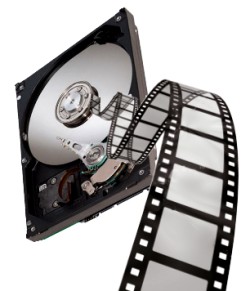 When was the last time you went to a theater and saw a film? I guess that depends on what you call a “film”, because there’s a reasonably good chance that what you saw was data stored on a hard drive on a media server and projected with a digital projector. The other day I ran across this rather charming clip (also below) that features a film projectionist talking about his job, and how that job is slowly becoming a relic. If you really love film, you may have the same fondness that I do for classic full-size theaters, and have a certain irrational attachment to all the things that go with them, including the distant clacking sound of an actual film projector. As much as I generally prefer this archaic process to work, one of my favorite theater experiences ever was when – in the middle of Hitchcock’s Dial M for Murder