
Archive for 2009
« Older Entries | Newer Entries »You’re Only As Jung As You Feel
[ Comments Off ]Posted on September 13, 2009 by admin in Editorial & Opinion
Sunday, September 13th, 2009Why you should buy me a copy of Carl Jung’s pivotal and unplublished Red Book. And you should listen to what I say, because I’m an ENFJ.


Videocracy: Media Control & Mind Control
[ 1 Comment ]Posted on September 12, 2009 by admin in Popular Media
Saturday, September 12th, 2009How Italy’s Prime Minister Silvio Berlusconi controls public sentiment by controlling television
 I’m looking forward to seeing Videocracy, in spite of the fact that many sources – Variety, for instance – are giving it rather mediocre reviews. The film, by Swedish film director Erik Gandini (who also brought us Gitmo – The New Rules of War

Bugs. They’re What’s For Dinner.
[ Comments Off ]Posted on September 11, 2009 by admin in Lifestyle & Culture
Friday, September 11th, 2009As the Filet o’ Fish becomes an endangered species, will insects become the next sushi?
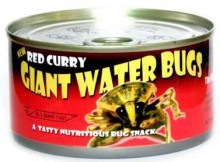 On the rare occasion that I eat at McDonald’s or Burger King, I order a fish or chicken sandwich of some kind, not really believing my own rationalization that I’m making some kind of healthier choice on the menu. I was doing a pretty good job of not wondering exactly which fish I was eating until yesterday, when I read that the Filet o’ Fish was being put on the endangered species list. Which got me thinking about the United Nations’ suggestion last year that insects are the food of the future. I mean, like I often say: “Give a man a fish and he’ll eat for a day, teach a man to fish, and he’ll starve in 50 years“. If the idea of an Entomophagic lifestyle bugs you, consider these two facts: 1.) In many parts of the the world (the word “parts” will take on a new meaning in fact 2!), insects are already a perfectly acceptable part of people’s diets, and 2:) You’re already eating them! If you’ve never looked at the FDA’s Food Defect Action Levels guide, give it a quick scan. A typical example of how many bugs you’re eating includes quantities like 150 or more insect fragments per 100 grams of Wheat flour. If you’re particularly microbe-phobic, just don’t, really, don’t review the guide; the glossary necessarily includes terms like “foreign matter”, “infestation”, “mold count”, “rancid”, “rot”, and “shrivel”. So if this hasn’t all turned you off to the idea of eating some bugs for dinner tonight, check out the insects-as-food enthusiasts’ web site InsectsAreFood.com, wherein Founder Marc Dennis points out that “Insects in cuisine today are what sushi was two decades ago” and advisor Jeff Stewart’s additional site CreepyCrawlyCooking.com asks reasonably, right on the home page: “Why eat insects?” Read the rest of this entry »
Cynicism Is A Sorry Kind Of Wisdom
[ 1 Comment ]Posted on September 10, 2009 by admin in Politics
Thursday, September 10th, 2009What did YOU think about Obama’s health care speech?
 |
|||
|
|||
|
|
|||
|
This is not a scientific poll
|
It’s rather poignant somehow that it was Barack Obama who said that on the campaign trail. The statement implies a kind of positive hopefulness that is one of the key reasons I voted for the man. I struggle with a certain cynicism about the current administration though; I wonder on occasion if I’ve been duped again by a clever campaign, and I wonder, as I’ve said before, if President Obama is doomed to a Carter-like presidency; a fairly decent man, swimming in the shark tank that is Washington. However, the confidence and clarity of his health care speech last night (full text, single page here ) reinvigorated some of my flailing hope for change in the capitol. I’m almost ashamed that his remark that “I am not the first President to take up this cause, but I am determined to be the last” made me think of Clinton, who would’ve prided himself on the ambiguity of the statement, in that he’s not claiming to fix the problem, he might just be the last president to try. I’m not fundamentelly cynical, but I think that to not be cynical about politics is naïve. And although on an individual basis with humans I’m one of the most hopeful people you’ll meet, the ongoing “Brady Bunch Dividing Line” that some American citizens have drawn between themselves seems irreversible, and completely immune to rational thought and discourse. Especially when we have a desperately struggling, profit-driven news media fanning these attitudes at every turn. So a speech like President Obama’s speech last night keeps me going, even if one of the most inspiring lines in the speech was written by Ted Kennedy: “What we face is above all a moral issue; at stake are not just the details of policy, but fundamental principles of social justice and the character of our country.” If we can remember as a country that our real, deeper American values are those regarding a certain character based on decency and reason, we’ll be alright. And I thank the president for reminding us of that. What do you think? Read the rest of this entry »
Is Reading A Book Bad For The Environment?
[ 3 Comments ]Posted on September 9, 2009 by admin in Clean & Green, Technology
Wednesday, September 9th, 2009One of the many reasons books and I are entering couples counseling.
 I have a troubled relationship with books, and when I describe it, it sounds like a should see a couples’ counselor. I’d like to spend more time with them, but I have myriad excuses, mostly relating to feeling distracted or too busy. Or I say I’d like to get together when I can spend some quality time together. Which is a cheap out, because I can speed read (I can comfortably read 950wpm according to spreeder.com, try it yourself). The fact is that as much as I love the tactile feeling of kicking back with a good book – the feel, the smell – it also started seeming intuitively wrong a number of years ago. I worked at a now-defunct book store when eBooks were first being discussed as a possibility, and they intrigued me. My bibliophilic coworkers would sneer at me, tsk-tsking me for questioning the sacred nature of a physical book, which was a little ironic: the store sold remainders and reprints. For the record, the publishing industry is not particularly green; only 5% of the paper used in books is recycled, around 35% of books printed are never read, and instead are returned to the publisher and end up in landfills, and around 70% of the world’s paper supply comes from natural forests, rather than tree farms. So what’s an eco-minded book lover to do? The fact is that although eBook readers ultimately are greener than printed books (although there’s a fair amount of debate on the topic), they still, frankly, kind of suck. Compare these reviews and prices. The most popular reader – Amazon’s Kindle
