« Older Entries |
[ Comments Off ]Posted on October 11, 2011 by admin in Technology
Tuesday, October 11th, 2011
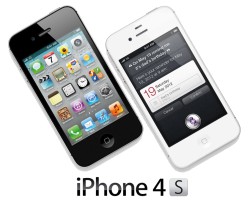
The iPhone 4s. Why talk to your friends when you can talk to your phone?
This is not the Droid I’m looking for. |
I have tremendous admiration for parts of the ethos, and many of the devices that are Steve Job’s legacy. But every time I manage to convince myself that he was just a demanding eccentric genius, and not a total d-bag, I end up learning something new. Like today, when I learned that he used his wealth to (much like the tech royalty in the William Gibson novel Neuromancer ) score himself a liver when he wanted one, putting himself ahead of other people that may have been more deserving. But enough personal-level billionaire genius bashing; what really irks me are the last two devices that Jobs introduced before beginning his journey into the After iLife (bless his soul). I already shared the agony of my unsatiated desires over a year ago, when I explained what Kate Moss and an iPad have in common, and bellyached about the Verizon whyPhone, and why I wasn’t all that excited about it. But now I have a new little quandary. I use Verizon, because as much as they suck in many ways, in my area they have the most reliable service of the Evil Triopoly of Mobile Providers available. As you may know, Verizon has a “new every two” plan, so I was finally thinking about breaking down and getting the iPhone, since I would probably be getting a sizable discount. But no-OO-oo. Apple has to go and release this “4s” thing the month I qualify. Great! A new, improved iPhone! Let’s see, unlike the OLD iPhone, this one offers….oh. Not much. But wait! You can TALK TO IT ! Finally a phone you can, er, TALK TO? I don’t want to talk TO my phone, I want to talk to PEOPLE, and talk to them ON my phone. Ah well. I may still break down and get one, but before I do, I’ll be checking out the Droid options. Although I was initially intrigued with both the HTC Thunderbolt and the Droid2, I’m not looking for something to tone my biceps, so the HTC was out, and as cool as the Droid2 is, compared to an iPhone, the interface feels like there’s an extra layer of glass between you and the “touch” part of the “touchscreen”. A likely choice? The latest version of the Motorola Droid X
  . In spite of its decidedly unsexy and mysterious hump on one end, it is REALLY FAST, and has a nice length for someone like me, who shoulders their phone a lot. See a video review of the Droid X below. And two last thoughts. 1.) Am I just paranoid, or does Verizon download malware to your phone in the last months before your new every two? I could swear that on this and my last two contracts my phone started acting wonky exactly 60 days before the contract was up….and 2.) How does a phone that hasn’t been released yet get a five star rating? See the screen grab from the Verizon site below. Read the rest of this entry »
[ Comments Off ]Posted on March 31, 2011 by admin in Music
Thursday, March 31st, 2011
I’m in no mood for games, Mr. Dolby, but I admire your marketing savvy.
Well lucky you, average music consumer. You can now purchase Thomas Dolby’s recent EP “Oceana” – previously only available to drooling sycophants like myself – on iTunes. And Mr. Dolby has announced another small change in marketing strategy. While he originally stated a plan to release three EP’s (exclusively to Flat Earth Society subscribers) leading up to the full release of the album “A Map Of The Floating City” this summer, he’s now added an online social networking adventure to the mix. While the FES forums and regular promotional materials that are being released don’t go into much detail, this fellow is apparently one of the developers. And Dolby himself described it in this interview with Amy Steele: “You can access the game for free through your web browser. It’s set in a kind of 1930s that might have come to be, had the strange experimental weapons of that time come to fruition. There were sonic cannons and Tesla death rays. In the game, tribes of players collaborate to explore what’s left of the planet following an event of mass destruction. Survivors take to the oceans in the hulls of abandoned vessels, and eventually they raft up, like the merchants’ barges in Tokyo harbor in the 17th century. A strange kind of barter culture emerges, a form of ‘maker’ society where players cobble together inventions using relics from the past. Most of this is done in text form, you understand, it’s a kind of collaborative fiction, not a 3d shoot em up. And as you explore the game, you will discover new songs from the 3rd and final EP from my album, ‘Urbanoia’.” As a non-gamer, this doesn’t thrill me much, but it’s a clever marketing angle. I’ll personally probably just wait for random leaks and buy the complete album when it arrives. We’ve been following Dolby’s recent releases with interest since last May, and will share any updates as they become available. So Oceanea remains the only material you can purchase without becoming a Flat Earth Society member, or playing the upcoming game. But if you love the tune Toadlickers as much as I do, well, there’s an app for that. Vids below. Read the rest of this entry »
[ Comments Off ]Posted on March 14, 2011 by admin in Popular Media
Monday, March 14th, 2011
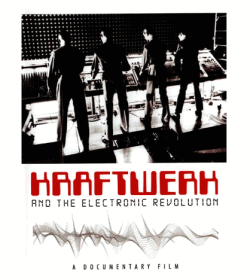
If you have three hours to kill and love German electronic music, this Kraut Rock doc will knock your socks off. And if you just don’t have the attention span, you can always pick up Kraftwerk’s new “Kling Klang Machine” iPhone app.
If you don’t have the attention span for
the documentary, maybe you should just
get the unrelated Kling Klang iPhone app. |
If by chance you spent any time in a nightclub in the last thirty years, there’s a fairly good chance that you owe what your feet were doing either directly or indirectly to the band Kraftwerk. From their early experimental work that led to the more commercial Autobahn and Radio-Activity
 in the mid 70′s, right through their infectious and often re-mixed machine pop of the 80′s, Kraftwerk’s music helped shape the entire Punk/alternative waves of the 70′s and 80′s. In part by helping inspire Bowie and Eno to move to Berlin, and in part by creating the basic template for the sounds of tunes like Donna Summer’s “I Feel Love”
 and bands and artists like Gary Numan
 , Depeche Mode, Orchestral Manoeuvres in the Dark, and Human League, to name just a few. And it’s probably safe to say that entire genres – like techno, industrial, and house – would not later even exist if it weren’t for Kraftwerk’s innovations in electronic pop and dance music. Hell, without Kraftwerk, Sprockets itself would be impossible. And then whose monkey would we touch? I’m stating the obvious here, mostly for any ignorant young hipsters reading that haven’t pieced these facts together yet. My own experience with Kraftwerk began as a teen, being transported to alternate realities by the sonic landscapes of tunes like “Autobahn” (with perhaps a little neurochemical assistance), which inspired me to become a fairly obsessive synthesist myself in an era before electronic pop really even existed. It’s important to note that while artists like Wendy Carlos were creating their brilliantly elaborate, but still bleepy and sqawky works like Switched-On Bach
 , Kraftwerk was creating electronic pop music so listenable and evolved in its sensibilities that artists like Eno have described it as “nostalgia from the future”. And Kraftwerk’s brilliantly simple marketing themes – from the slyly uber-teutonic Autobahn album cover with its iconic Mercedes Benz and Volkswagen cruising through the rolling hills of a Germanic dreamland, to their later images that implied – but directly never mentioned – the coldly intellectual clean cut scientists of World War II Germany – have helped maintain a peculiar mystique around the band for decades. I mean, have you ever actually seen or heard zee operator wiss zee pocket calc-u-lator speak in an interview? Probably not, unless you stopped by KlingKlang Studio in Dusseldorf and caught them in. The studio doesn’t even have a phone, according to this Guardian piece that explores the band’s press stealth, but manages to illicit “I got a new head, and I’m fine“. But enough of my sycophantic drivel, I really just wanted to suggest that if you have three hours and an obsessive interest in the intricate details of Kraftwerk’s evolution, you should check out Kraftwerk and the Electronic Revolution. It explores the entire German electronic music scene from the 60′s through to the 80′s, with Kraftwerk as a main course but with fairly hearty (and probably necessary) side-dishes of Popol Vuh, Tangerine Dream, Amon Duul and Neu! If you’re REALLY into Kraftwerk, you may have already seen it; it’s been out since 2008. I personally only discovered it the other day. I recommend watching it as a mini-series though; three straight hours of in-depth commentary and analysis was a bit much even for a lifelong fan like like myself. It’s already a great deal as an on-demand DVD, but there’s also a $2.99 download
 . And if you simply don’t have the attention span, maybe you should just get their new iPhone app, released last week.
Read the rest of this entry »
[ 1 Comment ]Posted on March 11, 2011 by admin in Technology
Friday, March 11th, 2011
Part guerrilla theatre, part social object, the new iPhone app called “Situationist” could change your life.
 As a terminal punk with a lifelong love of experimental theater, culture jamming, and relative disregard for social convention, how could I not love the new iPhone app Situationist? Or at least the idea behind it anyway – I don’t own an iPhone, and have previously explained why I probably won’t. The concept behind the app is awesome though; a little like guerilla theater meets social object. In the developers’ own words: It alerts members to each others’ proximity and gets them to interact in random “situations”. These situations vary from the friendly “Hug me for 5 seconds exactly” or “Compliment me on my haircut”, to the subversive “Help me rouse everyone around us into revolutionary fervour and storm the nearest TV station”. The developers are Benrik, which is a portmanteau of Ben Carey and Henrik Delehag, who are performance artists, world remodelers, and culture jammers themselves. And if you’re wondering if the app is in reference to the international socio-political art revolutionaries of the 50′s and 60′s known as Situationist International (whom we’ve discussed before) the answer is a definitive “yes”. I love the added layer of irony that in order to engage in this anti-capitalist inspired activity, you have to have purchased an iPhone. Benrik’s previous adventures have included things like their “This Diary Will Change Your Life” series, the best of which has been compiled in the book This Book Will Change Your Life
 . We’ve included a few examples from the 2005 diary below to demonstrate just how much the diary could change your life. Of course, the Situationist app itself could be pretty life-changing, but as we said, it has that little iPhone barrier to ease of consumption. Learn more about Benrik on their site . There’s much more to them than an iPhone app and some cult books.
Read the rest of this entry »
[ 1 Comment ]Posted on February 4, 2011 by admin in Technology
Friday, February 4th, 2011
The iPhone finally comes to Verizon, but will it sound better? Time will tell, but have you ever wondered WHY the audio quality of cell phones is worse today than landlines were thirty years ago?
 
The only app I want on an iPhone is
the one that makes it actually
function for voice communication |
A friend asked me today if – since I’m a Verizon customer – I was FINALLY going to get an iPhone. Referencing “Convoy”, the 70′s novelty radio hit and movie
 about truck driver CB radio culture (here’s the trailer), I replied “that’s a big fat negatori, Rubber Ducky“. Yes, I’ve said it before. When it comes to technology, I’m a big whiny baby. Just see my Disappointing Technologies Part I and Part II. Or my explanations of why your mp3′s or your robots suck. But one thing I probably have found more annoying than anything – whether technology related or not – is the infernally faulty and obscenely expensive set of devices and services that we end up calling a “mobile phone”. Aside from the absurd prevalence of dropped calls (a friend of mine has a four square foot area in his Chicago apartment where his AT&T iPhone works that we call his “iZone”) I’ve always been astounded that in the 21st century, a device that is specifically designed to transmit your voice to another person’s ear does it less effectively than the walkie-talkies I played with as a kid. And this horrible sound quality is nowhere more obvious, in my opinion, than with an iPhone. This Wired piece explains that part of this problem will go away with an iPhone on Verizon’s networks, but I predict that the fundamental audio quality of cell phones – which is arguably a joke compared to landlines of even thirty years ago – will not get any better soon. Why? The first reason is that – as most of us would agree these days – a cell phone isn’t for talking, it’s for texting, web browsing, and apps. Verizon is well aware of this, and started revising all their data plans in preparation for the launch of the Verizon-compatible iPhone, which will add a new kind of load to their networks. And the second reason? It’s the fact that no-one seems to care about the atrocious audio quality of modern cellular/wireless networks. If it ain’t broke, why would they fix it? If you don’t know what I mean, you’re either a digital native who wouldn’t understand the old pin drop commercial of a couple decades ago, a very tolerant person, or perhaps just plain deaf. Remember when you were a teen, and in naively romantic moments in the wee hours on the phone, you’d play your boyfriend or girlfriend some cheesy song that expressed your complex teen feelings in a way that words never could? Well, forget it pal. If you have typical cell service in America and have ever tried to achieve anything beyond the garbled, delay-ridden talking that we’re used to, you know what I mean. But have you ever wondered why? You’d think it’s because the signal is being bounced through the atmosphere to a bunch of towers, maybe a satellite, and then a few more towers, right? Well, that is in fact part of the problem. But the real problem has two more elements. One of them is profit. Rather than investing in and building out high-quality capacity and then charging you for it, providers will continue to offer you the lowest acceptable quality to eek the most out of existing networks. And if customers don’t seem to care about the audio, they’ll continue to focus on non-voice data transfer. The other part of the problem is the audio compression codecs providers use to squish decipherable voice information into the smallest possible amount of data. Somehow, the rather shoddy codecs used for the 128kbps mp3′s you buy on iTunes became accepted as the industry standard for quality audio. That’s probably okay ultimately; studies show that the majority of people actually can’t distinguish that bitrate from higher quality sound sources. So fine. Let’s just say that’s acceptable audio. But if you’ve ever heard a song in say, a 64 or 32kbps bitrate, you know how bad things start sounding pretty quickly. And although simple voice data may even sound clearer around 32kbps (because a lot of people’s weird breath and mouth noises get compressed out) you may be surprised to know the actual compression and frequency response numbers for standard cell phone service. The bitrate is often 8kbps, and the frequency range being used is typically 400 Hz to 3500 Hz. For comparison, a decent stereo system has perhaps 60 Hz – 18,000 Hz capability. The 400 Hz – 3500 Hz part wouldn’t be so bad by itself, because aside from harmonics that affect the timbre and the sibilant sounds we make, the majority of vocal sounds are in that frequency range. The real problem is in all the other things the audio codecs do to compress the voice data. While it is in fact INCREDIBLE what audio engineers and programmers have developed over the years to facilitate various kinds of voice audio compression, the choice to continue applying the most “aggressive” of these algorithms and codecs is what makes your cell call sound like crap. Aside from the low bitrate and limited frequency response, the voice signal is further analyzed and hacked up with things like voice activity detection and linear predictive coding, which decide whether something is a voice, background noise, or silence. The codec then discards whatever it thinks is not useful voice information, further compresses the data, transmits it, and reverses the process on the other end. Thus the word “codec”, which is a portmanteau of “compressor-decompressor”. The result of all this secret-decoder-ring monkeying around? Well, when you combine it with the bizarrely un-ergonomic deck-of-cards-like shape of an iPhone and the tiny mic and specialized audio processing designed to compensate for it, the result is that horrifying shriek that interrupts your friend’s garbled voice when their child says something at a normal volume in the background. So no, I won’t be rushing to the Verizon store to pick up an iPhone. In fact, I’m thinking of switching to one of these little handheld CB jobbies
 . It says the range is only four miles, but that’s without shootin’ skip.
Read the rest of this entry »

